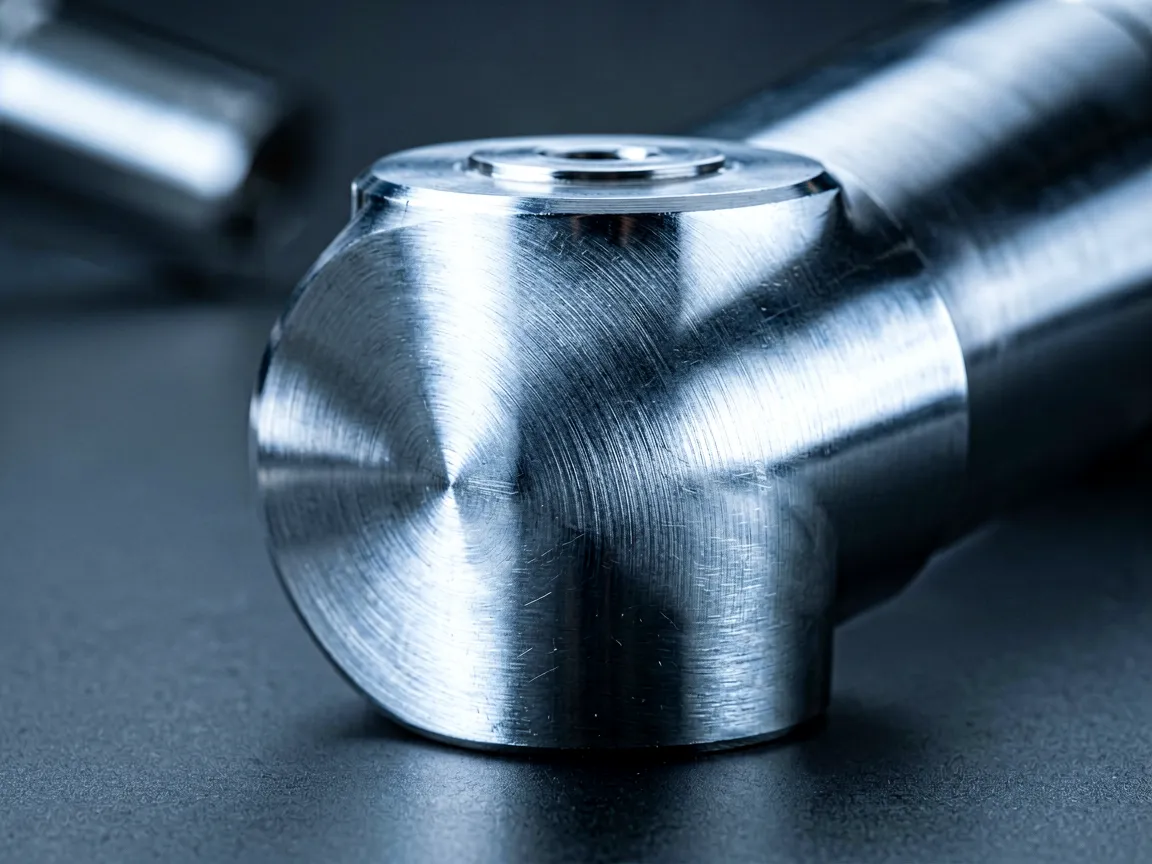
What Is 321 Stainless Steel?
321 stainless steel (UNS S32100 / EN 1.4541) is a titanium-stabilized austenitic stainless steel closely related to the widely used 304 grade. The key differentiator is the addition of titanium, which has a strong affinity for carbon. During manufacturing and welding, titanium combines with carbon to form titanium carbides (TiC) rather than chromium carbides. This stabilization process preserves the chromium content at grain boundaries, preventing the phenomenon known as sensitization and its associated intergranular corrosion.
Grade 321 was developed specifically for applications where components must be welded in service and cannot undergo post-weld solution annealing. Sometimes referred to as "stabilized 304," it delivers the corrosion resistance of 304 while adding superior high-temperature performance and weld-zone integrity without the need for secondary heat treatment.
Chemical Composition
| Element | Composition (%) |
|---------|----------------|
| Chromium (Cr) | 17.0 – 19.0 |
| Nickel (Ni) | 9.0 – 12.0 |
| Titanium (Ti) | ≥ 5 × C% |
| Carbon (C) | ≤ 0.08 |
| Manganese (Mn) | ≤ 2.00 |
| Silicon (Si) | ≤ 1.00 |
| Phosphorus (P) | ≤ 0.045 |
| Sulfur (S) | ≤ 0.030 |
| Iron (Fe) | Balance |
The minimum titanium content of 5 times the carbon percentage ensures that all available carbon is tied up as titanium carbide, leaving chromium free to maintain the passive oxide layer that provides corrosion resistance.
Key Mechanical Properties (Annealed, Room Temperature)
At room temperature, 321 performs essentially identically to 304. The defining advantage emerges at elevated temperatures and in the as-welded condition.
High-Temperature Performance
321 stainless steel excels in elevated-temperature environments where standard 304 would begin to lose mechanical strength and corrosion resistance:
| Temperature (°C) | Approx. Tensile Strength (MPa) |
|-------------------|-------------------------------|
| 20 | 515 |
| 300 | 415 |
| 500 | 330 |
| 650 | 205 |
| 800 | 110 |
321 can be used continuously up to approximately 870°C (1600°F) in oxidizing environments and up to 925°C (1700°F) on an intermittent basis. Its creep strength is notably superior to 304 and slightly better than 316 above 600°C, making it an ideal choice for thermal cycling applications.
Essential Features
Typical Applications
321 stainless steel is specified across industries where welding and high-temperature exposure are simultaneous requirements:
321 vs. 304 vs. 316L — Quick Comparison
| Feature | 321 | 304 | 316L |
|---------|-----|-----|------|
| Corrosion Resistance | Good | Good | Excellent |
| Sensitization Resistance | Excellent | Poor | Good |
| Weld Corrosion Resistance | Excellent | Poor | Good |
| Max. Service Temperature | 925°C | 870°C | 870°C |
| Creep Strength | Good | Fair | Good |
| Cost | Higher than 304 | Moderate | High |
| Post-Weld Anneal Needed? | No | Yes | Generally no |
When to Choose 321
Select 321 stainless steel when your application involves welding followed by service in the 425–870°C temperature range and post-weld heat treatment is impractical or impossible. It is the go-to material for thick-section welded assemblies, exhaust systems, heat exchanger tubing, and any fabricated structure exposed to thermal cycling where maintaining corrosion resistance in the heat-affected zone is critical.
For ambient-temperature aqueous service where chloride stress corrosion cracking is a concern, 316L may be a better alternative. When cost is the primary constraint and post-weld annealing is feasible, standard 304 remains a strong contender.
Product Forms Available
Rubao-Chinasteel supplies 321 stainless steel in a comprehensive range of forms:
For technical specifications, pricing, and lead-time inquiries, contact our trading team today.